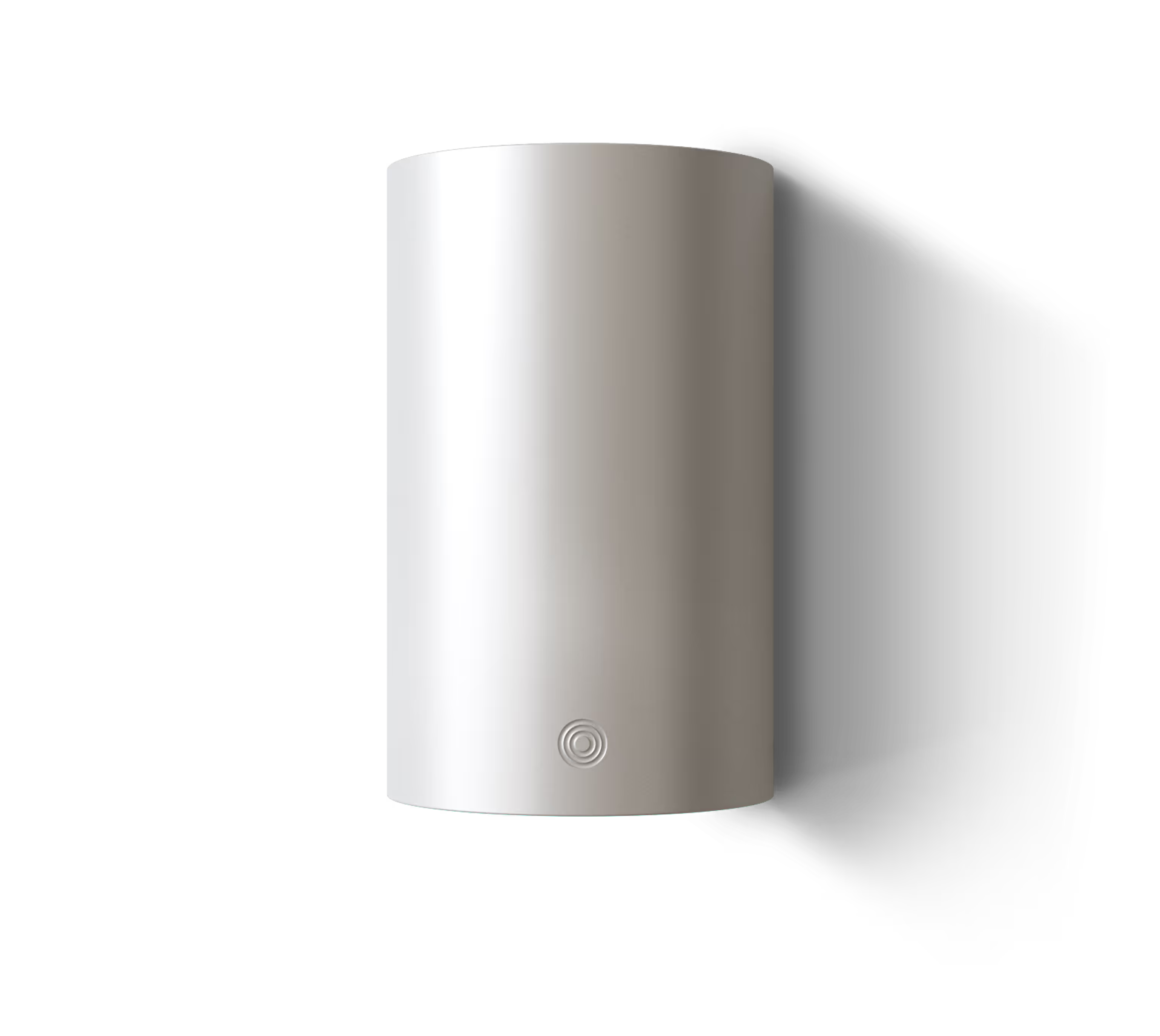
Can I use Alva LINK with Home Assistant or Homey?
Yes. Alva LINK includes a bridge mode that exposes the energy hardware it controls to Home Assistant and Homey. Bridge mode is verified for Home Assistant and Homey only. Other integrations are community-built and not officially supported.
What bridge mode does: Many heat pumps, solar inverters, and batteries are difficult or impossible to integrate directly into Home Assistant or Homey. Their Modbus registers aren't documented publicly, their proprietary apps don't expose APIs, and community-maintained integrations are often fragile and unmaintained. LINK solves this by acting as a translator — it connects to your energy hardware via Modbus or SG-Ready (which it already does for optimization) and then exposes the relevant data and controls over a local API that Home Assistant and Homey can consume.
What gets exposed
- Heat pump: compressor state, indoor/outdoor temperature, flow temperature, current power draw, operating mode, setpoint (read/write)
- Solar inverter: current production (W), daily yield (kWh), grid export/import
- Battery: state of charge (%), charge/discharge power, mode
- EV charger: charging state, current draw, session energy
How it works technically: LINK exposes a local REST API and/or MQTT broker on your home network. Home Assistant discovers it via its integration, or you can add it manually with the device's local IP address. Entities appear in Home Assistant automatically — no YAML editing, no custom components, no Modbus register tables to configure by hand.
Important: bridge mode works alongside Autopilot, not instead of it. You can run Alva's optimization and still have your energy devices visible in Home Assistant for dashboards, additional automations, or logging. If you write a Home Assistant automation that conflicts with Autopilot's schedule, LINK will flag the conflict in the app. You choose which takes priority.
For advanced users: If you prefer to handle all optimization yourself through Home Assistant's automations and just want LINK as a Modbus-to-network bridge, you can disable Autopilot and run the free Essential tier. LINK becomes a reliable hardware bridge that gives your home automation platform direct access to devices it otherwise couldn't reach. This alone may justify the €99 hardware cost for serious Home Assistant users who've struggled with Modbus configuration.
Integration status: Home Assistant integration is available from launch. Homey integration follows. MQTT support enables compatibility with virtually any home automation platform that speaks MQTT. The local API operates entirely on your LAN — no cloud dependency, no external account linking, no third-party API keys required.
Meet the device that runs your home smarter